Leslie Reta Part 1
I’m excited to have Leslie Reta, the author of Always, Forever and The Space Between Safety and Survival with us today. She has quite the story to tell and does it without making anyone the villain.
About the Author
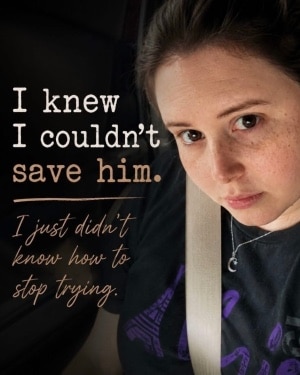
how to stop trying
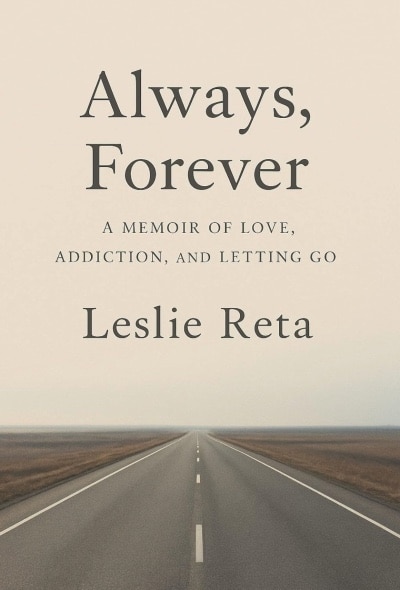
Always, Forever
A memoir of loving an addict, surviving trauma, and learning to breathe again
Some love stories don’t end with a breakup.
Some grief doesn’t wait for death.
And some goodbyes happen slowly—quietly—over years.
Always, Forever is a raw, unfiltered memoir about loving someone with addiction, raising a child in the shadow of chaos, and learning what survival costs when hope refuses to die.
Told through lived moments, diary entries, and reflection, this book follows one woman’s journey from teenage love to motherhood, from endurance to reckoning. It is the story of staying longer than intended, leaving in pieces, and carrying responsibility long after it should have ended.
This is not a book about fixing addiction.
It is a book about what addiction fixes inside a family.
The Space Between Safety and Survival
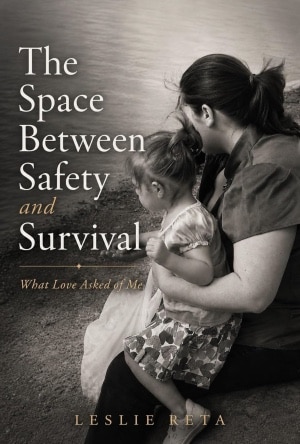
You can survive something and still be shaped by it.
Some people learn responsibility early.
They learn how to stay calm in chaos.
How to hold everything together.
How to keep showing up long after they’re exhausted.
Eventually, survival stops feeling temporary.
In The Space Between Safety and Survival, Leslie Reta writes about the quiet cost of carrying too much for too long—through family systems, helping professions, trauma, caregiving, and the invisible weight people learn to normalize.
This is not a story about having all the answers.
It’s about what happens when endurance becomes identity.
Some things don’t leave when the crisis ends.
“Moth to a Flame“
An accurate description of loving someone struggling with addiction.
You know the fire is hot.
You know exactly what fire does.
And apparently some of us are still like, but maybe if I just get a little closer…
My Take
Format: I wasn’t sure about the format of Always & Forever at first. But, once I dove in, I completely understood. Leslie Reta doesn’t do one-line thoughts; they were paragraphs packed with emotion and meaning. Every word felt intentional, every thought hit home.
Always, Forever: This emotional memoir gave me something I wasn’t expecting: perspective. Leslie writes about loving someone with addiction while protecting herself and her daughter, without making anyone the villain. We see the wife, mother, daughter, and addict all at once. By the end, I understood more clearly why loving, leaving, setting boundaries, and healing are rarely simple.
The Space Between Safety and Survival: Ever read a book and think, oh crap, are we talking about me now? Leslie explores love, caregiving, boundaries, and how being needed tangles with self-worth. Yep, so relatable. I saw myself in the over-giving, the need to be needed, and the habit of measuring my worth by how much I did for others. Just say no? Yeah, right. Leslie Reta never preaches; she helps you recognize patterns you may have missed. I finished a bit emotional, a lot understood, and maybe a little called out – but that’s not a bad thing.
Gifted book, honest thoughts — always.
Join the TBR – The Bookish Rundown
Need help feeding that ever-growing TBR?
I’ll send you new reviews, favorite finds, giveaways, and the occasional bookish rabbit hole worth falling into.
No inbox overload. Promise.
Sign up now
Interview with Leslie Reta
Hi Leslie! I’m so excited to have the chance to pick your brain. Always & Forever drew me in like a moth to a flame—which, now that I think about it, is a pretty good description of what it can feel like to love someone struggling with addiction. The format made every word feel intentional, like there was nowhere for the reader—or you—to hide. So, let’s start there…
1. Can you give me a one-sentence summary of Always & Forever? I know you’re good at packing an entire emotional experience into very few words.
It’s the story of how I spent years trying to save the man I loved from addiction, slowly losing pieces of myself along the way, until being his wife and my daughter’s mother could no longer exist in the same life—and I had to choose which one of us I was going to save.
2. And how about a one-sentence summary of The Space Between Safety & Survival? What would you most want someone to understand about it before picking it up?
It’s about what happens when the chaos finally ends and you realize you escaped the life that was hurting you, but not the survival instincts it left behind—and now you have to figure out how to live inside relationships, family systems, and a version of yourself built for war.
How the Books Came About
3. Both books deal with addiction, but from different places. Why did you decide these were stories you needed to put on paper?
Honestly, I didn’t decide either of them needed to be put on paper. Always, Forever started because I was searching the morgue for Chris. I hadn’t heard from him or know where he was, and after everything, my brain knew where to look. Was the man I had loved for most of my adult life dead?
I started writing, trying to get shit out of my head.
But once I started writing, I realized there was a difference between remembering what happened and actually processing it. I could tell you the facts of our story all day long, explain addiction, and why I made the decisions I made. What I hadn’t done was let myself feel what any of it had cost me.
So I wrote Always, Forever. And when I finished it, I thought that was it. Except, I told the story of loving someone through addiction. I hadn’t touched what living that way did to me. The weird thing about surviving is eventually the thing is over but, you’re still doing all the shit that kept you alive while it was happening. You’re still reading rooms, anticipating problems, waiting for the other shoe to drop, and taking care of everybody else before it occurs to you to ask what you need. And that was a different story.
Always, Forever became the story of what I lived through.
The Space Between Safety and Survival became the story of what I carried out with me.
I didn’t know I needed to write either one until I was already writing it.
Living With Addiction
4. I’d like to talk about the ripple effect of addiction, if that’s okay with you. Addiction may belong to one person, but it rarely affects only that person. What do you wish more people understood about what happens to the spouse, children, family, and friends living alongside it?
I wish people understood that the person using isn’t the only person addiction changes. You don’t have to use the drug for your life to revolve around it. I never touched meth, but somehow meth still dictated my life. His using, his lies, the crashes, the disappearing acts—they affected everything.
You get really good at reading a room when the room is one person. A look. A tone. The way they walk through the door. You know before they say a word. Eventually you start adjusting yourself around them without even realizing it. You learnhow to exist around an addiction that isn’t yours.
One day the person is gone, or the drugs are gone, or the crisis is finally over—and nobody tells your body. That’s what I wish people understood. I didn’t use meth. But I had to recover from it too.
Use Your Words Wisely
5. I volunteer on our local domestic violence crisis line, and one of the hardest things is knowing what to say when someone is living in an unsafe or unhealthy situation. There really aren’t any magical words. From your experience, what does help? And what are some things people say with good intentions that can actually make things harder?
One of the hardest things for people to understand is you can know they’re right and still not be ready to do what they’re telling you to do.
People told me, “Just leave.” “Cut him off.” “I don’t know why you put up with it.” “Think about your daughter.” And none of those people were necessarily wrong. I just wasn’t ready. I loved him. I didn’t want to cut him off. I didn’t want him gone. I wanted him to stop using. I wanted the person I knew to come back and stay. Telling me to leave didn’t change that.
What it did sometimes change was how much I told people. If every conversation ends with somebody telling you what you should do, eventually you stop having the conversation. Not because things got better. You just get tired of defending choices you’re already struggling with.
I think what would have helped me most was having people who could say, “I don’t understand why you’re staying, but I’m still here.”
You don’t have to agree with someone’s choices to stay connected. You don’t have to pretend what is happening is okay. And if they’re in danger, obviously safety matters. But there is a difference between being honest about what you’re seeing and making someone feel like they have to choose what you think is right before they’re allowed to come back to you. Because if the day comes when they are ready, you want them to know who they can call.
As you can tell, there is so much more to Leslie Reta’s story. She has such an eloquent, honest way of talking about addiction and the ripple effect it has on everyone involved.
We hope you’ll continue with us in Part Two of this author interview as Leslie shares more of her story, her insight, and the realities of addiction.