Leslie – Part 2
Thank you for joining me for Leslie – Part 2 of my interview with Leslie Reta, author of Always, Forever and The Space Between Safety and Survival. We’re picking up right where we left off with more of her story, her insight, and the realities of loving someone through addiction.
If you haven’t read Part One, click here.
About the Author

Different seat.
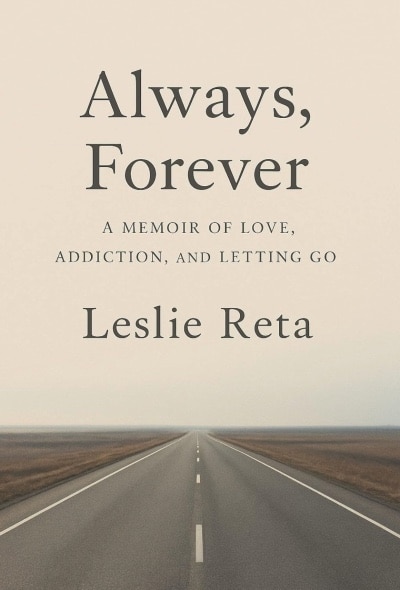
Always, Forever
A memoir of loving an addict, surviving trauma, and learning to breathe again
Some love stories don’t end with a breakup.
Some grief doesn’t wait for death.
And some goodbyes happen slowly—quietly—over years.
Always, Forever is a raw, unfiltered memoir about loving someone with addiction, raising a child in the shadow of chaos, and learning what survival costs when hope refuses to die.
The Space Between Safety and Survival
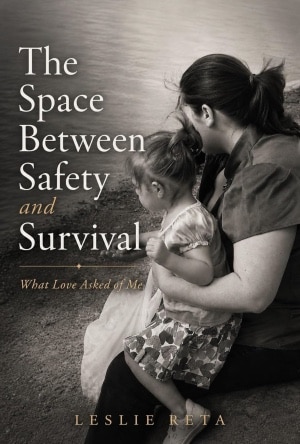
You can survive something and still be shaped by it.
Some people learn responsibility early.
They learn how to stay calm in chaos.
How to hold everything together.
How to keep showing up long after they’re exhausted.
Eventually, survival stops feeling temporary.
In The Space Between Safety and Survival, Leslie Reta writes about the quiet cost of carrying too much for too long—through family systems, helping professions, trauma, caregiving, and the invisible weight people learn to normalize.
My Take
See Part One for my review of each book.
Join the TBR – The Bookish Rundown
There’s always something to be excited about and I’ll my latest once or twice a month with no inbox overload. Promise.
Sign up now
Interview with Leslie – Part 2
If you missed Part One, you can catch up here before diving into the rest of Leslie’s story.
6. Why do people stay? From the outside, it can seem simple to leave. Your books make it clear it is anything but simple. What do you wish people understood about why some might stay?
There’s not one answer. I stayed because I loved him. Because we had a daughter. Because I remembered who he was before meth. Every good stretch made me believe this time was different. And because I didn’t want to leave him—I wanted the addiction to leave him. I didn’t want another life or another family. I wanted ours, without meth in the middle of it.
Leaving someone you love when they’re sick can feel like abandoning them, even when staying is destroying you. And when you understand addiction, it gets even more complicated. Where do you draw the line between having compassion for someone and protecting yourself from what their illness is doing to you? I knew that line existed. I just kept moving it.
You don’t wake up and decide to lose yourself in someone else’s addiction. It happens an inch at a time. You adjust to one thing, then another. You forgive something you never thought you’d forgive. Explain something you never thought you’d explain. You survive something you swore you never would. They come back to themselves for a bit, you get just enough of the person back to remember why you’re still fighting.
By the time somebody asks, “Why the fuck are you still there?” they’re looking at the person he is now. You’re carrying every version of him you’ve ever known—and still hoping the one you fell in love with is in there somewhere.
Losing Yourself
7. At what point does loving someone with an addiction begin to turn into losing yourself? Is there a moment when you realized you were crossing that line?
I didn’t wake up one day and suddenly realize I had lost myself. I just became less and less important in my own life. His needs were louder. His crises were more urgent. Something needed to be handled first, so I handled it. Then I handled the next thing. And the next. Somewhere along the way, I stopped asking what I needed because there was never enough room for my needs.
The hardest part is so much of it looks like love while you’re doing it. Being understanding. Giving another chance. Helping. Forgiving. Holding everything together. You think you’re fighting for someone you love without realizing how much of yourself you’re giving up just to keep everything from falling apart. When being the person who holds everything together becomes part of who you are, it gets really hard to tell the difference between being loved and being needed. I don’t think I knew I had lost myself until there was finally enough quiet for me to notice I wasn’t there anymore.
8. There’s a fine line between supporting and enabling. How did you recognize the difference?
I knew what enabling was. I could identify it in somebody else’s life. It got harder when the consequences belonged to someone I loved.
I think supporting someone crosses into enabling when your help starts making their addiction easier for them to live with. When you’re absorbing their consequences, fixing what they broke, carrying responsibilities they stopped carrying because they learned you would.
The Problem Is…
it rarely feels like enabling. It feels like helping. It feels like keeping the lights on, protecting the kids, making sure they have somewhere to sleep, or preventing one more disaster because you’re exhausted from the last one. Sometimes you aren’t even trying to protect them from the consequences. You’re trying to protect everybody else from the fallout. That’s where it got complicated. Somebody had to. Letting everything fall apart wouldn’t have only affected him. So I learned to ask myself: am I doing this because it actually needs to be done, or am I doing it so he doesn’t have to feel what his choices cost?
I think that’s where the line was for me. I could protect my daughter. I could protect myself. I could keep our lives functioning. But I couldn’t keep protecting him from himself and call it helping.
New Beliefs
9. Were there things you believed about addiction, relationships, or yourself that changed because of what you lived through?
I used to believe addiction was a choice. I thought he was choosing drugs over us. If he loved us enough, he would stop. If I loved him enough, supported him enough, found the right resource, said the right thing, drew the right line—something would make him choose us. And when that didn’t work, I carried guilt about what would happen if I stopped trying.
There was another side. If I left, who would he have? If I cut him off, would he get worse? What if something happened when I stopped answering the phone? Understanding that I couldn’t control his addiction didn’t magically make me stop feeling responsible for what might happen to him.
I was one of those people who thought, I would never stay in a relationship like that. That could never be me. Turns out, you don’t know where your line is until you’re standing on it. Sometimes you don’t realize you’re moving it. You accept one thing. Then something else, and the line moves again. Nobody hands you a sign that says, This is the moment you’ve officially become the person you swore you’d never be.
Professionally, I knew addiction, resources, risk and what I needed to do to protect my daughter. That knowledge mattered—I used it to keep her safe. But it didn’t make me immune to this.
Knowing what addiction is and how to stop loving someone who has one are two different things. I think that’s the biggest thing that changed for me. I stopped seeing people who stay as people who don’t understand. Sometimes they understand perfectly. Understanding and being ready to let go are not the same thing.
Children & Family
10. You made it clear your daughter was your priority. What effects do you believe the situation had on her, and were there things you worried about that others might not have recognized?
For a long time, I thought I could let her have her father while I managed the addiction around her. I never left her alone with him. Watched everything. I made decisions I don’t think he realized I was making. And I genuinely believed if I stayed between her and the worst of it, I could protect her.
But I couldn’t. It made her shrink herself. She became a people pleaser. She paid attention to what everybody else needed before she thought of herself. And somewhere in that, she started believing that her feelings mattered less than his. Her self-image declined rapidly, and I watched this kid who had every reason to believe she was fucking amazing start questioning herself.
That was one of the hardest things for me to understand.
I was so focused on keeping her physically safe that I didn’t understand the other ways addiction could reach her. She wasn’t using drugs. Nobody was putting her directly in harm’s way. But she was still learning how much space she was allowed to take up in a room where somebody else’s needs were always louder.
And I couldn’t protect her from loving him, waiting for him, missing him, or noticing when he wasn’t there. I couldn’t make his inconsistency feel consistent. Eventually I had to stop asking whether I could manage the risk and start asking what all of this was teaching her. I didn’t want her growing up thinking this was what love looked like. I didn’t want her learning that loving someone meant constantly adjusting yourself around their choices. And I definitely didn’t want the relationship I was modeling for her to become the kind of relationship she accepted for herself someday.
I could make my choices about what I was willing to survive. I couldn’t make that choice for her.
Adaptation
11. Did you see your daughter adapting to the chaos in ways that surprised you?
She got quiet. She became good at keeping everybody happy and adjusting herself based on which version of him she was getting. She didn’t tell him when she was angry or disappointed or when he had hurt her. She saved those conversations for me. We would talk about how she was feeling, and sometimes I would encourage her to tell him. I wanted her to know she was allowed to be angry. She was allowed to tell him when he hurt her. And she would tell me she couldn’t because she didn’t want to hurt his feelings. That still gets me. She was the child. Her feelings were supposed to be the ones the adults were protecting. Instead, she had learned to protect his.
And unfortunately, that message didn’t only come from living with his addiction. When she was 11, she only wanted to see her father in a therapy setting. I remember how incredibly hard it was to watch an 11-year-old have enough insight to set that kind of boundary with her own father. His mother responded that Kay needed to think about how that would hurt him. She was 11. She was trying to tell the adults what she needed to feel safe enough to have a relationship with her father, and somehow even then the conversation became about protecting his feelings.
That was six years ago. His mother hasn’t spoken to either of us since. Her behavior adapted around him the same way. When he was there, she watched him. She adjusted, stayed quiet, kept the peace. And then he would leave, and she’d break. That’s when I got everything she had been holding in.
“Why doesn’t he love me enough?”
“Why am I not good enough?”
I think that’s one of the cruelest things addiction does to children. They don’t understand someone can love them and still be incapable of showing up for them consistently. They just know the person they love keeps choosing something that takes them away. So they look for an explanation that makes sense to a child. And sometimes that explanation becomes, “It must be me.”
12. How do you balance protecting a child from an unhealthy situation while also being honest with them about what is happening?
I don’t think you can completely protect them. I wish you could. I spent years trying.
What you can do is give them something steady to come back to. They need to know that somebody is going to show up, that home is safe, and that the adults around them are going to be adults. I couldn’t control what he did, but I could make sure his choices didn’t become her responsibility.
I never wanted to tell her what her father was. I wanted her to be allowed to love him, to have whatever relationship he was capable of having. I worked hard to make it possible without sacrificing her safety. As she got older, I wanted her to decide for herself what she thought of him based on her experiences—not mine.
But I couldn’t keep experiences from hurting her. I could protect her from being alone with him when he wasn’t safe and from being in situations she shouldn’t have been in. I couldn’t protect her from wondering why her father didn’t show up or make disappointment hurt less. She could be angry with him and still love him. She could miss him and not want to see him. She could feel her feels without having to take care of me in the process. I couldn’t control what kind of father he was going to be. I could control what kind of mother she had while she figured out what that meant.
Crystal Ball
13. Looking back, is there anything you wish you had done differently when it came to protecting your daughter—or yourself?
Honestly, not really. I knew it was affecting her emotionally. But I still believe allowing her the space to come to her own conclusions about her father was the right decision. I never wanted her to look back and believe I was the reason she didn’t have a relationship with him. If I cut off contact before she was ready, the story could have been I kept her from him. I didn’t want to make that decision if I could keep her safe while she figured out what kind of relationship she wanted with him.
So I tried to do both. I tried to keep their relationship intact while also giving her somewhere safe to have the big feelings that came with it. We talked—a lot. When her self-image declined, we started doing daily affirmations. Anytime she said something negative about herself, I made her tell me three positive things. I could keep reminding her that what he did was not a reflection of her worth. And eventually, she did come to her own conclusions. They were hers. Not mine.
As for me, as much as part of me wants to say I would have done things differently, I don’t regret any of it. Everything I’ve lived through has made me the person I am today, and I can’t live my life looking backward wishing I could rewrite it. Do I wish I had found the strength to put additional boundaries in place sooner? Possibly.
But the time my daughter had with her father?
I wouldn’t take that away from her. I wouldn’t change it.
That doesn’t mean I don’t carry guilt. Lord knows I do. Tons of it. I question whether I protected her enough, whether I let things go on too long, whether I should have made different choices sooner. I don’t know that I’ll ever completely stop doing that. But at the end of the day, there is really only one person’s opinion of those decisions that matters to me.
Kay’s.
She lived it too. She is the person who had to grow up inside the choices I made. And now that she’s old enough to understand what I was trying to do, I know how she feels about those decisions.
That’s enough for me.
Survival vs. Healing
14. Please explain the difference between surviving and healing. They sound like they should be the same thing, but your books make it clear they aren’t.
Surviving is doing whatever you have to do to get through what’s happening. Healing is realizing you’re still doing those things long after they stopped being necessary.
Survival made me capable. I could handle a crisis, anticipate problems before they happenedk, read people, fix things, carry everybody else, and keep moving no matter what was happening around me. Those things kept me functioning when my life was chaos, so I didn’t recognize them as something I might need to unlearn. I thought I was just really good at handling shit. I don’t hate that version of me. I’m grateful for her. She kept my daughter safe, went to work, paid bills. Decisions were made when there weren’t good ones. She kept going on days when falling apart made more sense. I owe that version of myself a lot. But she also doesn’t know when her job is over.
The chaos stopped, and she kept showing up for work. Peace didn’t feel peaceful. It felt like the quiet before the storm. If there wasn’t a problem to solve, part of me was waiting for one. If everybody was okay, I was checking to make sure they really were. I think that’s what healing has been for me. Not killing off the person I became to survive. Not being ashamed of her. Just slowly teaching her that she doesn’t have to protect me from everything anymore.
Survival kept me alive. Healing is learning how to let me rest.
15. The parts about chaos slowly becoming normal broke my heart. How does someone recognize they’ve adjusted to something unhealthy simply because they’ve lived with it for so long?
They don’t. At least I didn’t. I don’t think you understand you’re in survival mode when you’re in it. You think you’re handling your life. That’s the fucked-up thing about chaos becoming normal—it doesn’t happen all at once. If my life, on the last day, had been dropped into my lap on the first day, I probably would have looked at it and said, absolutely fucking not.
But that’s not how it happens.
One thing changes, so you adjust. Then something else happens, and you adjust. Something that would have terrified you six months ago becomes Tuesday. You stop asking whether something is normal and start wondering how you’re going to handle it. And every time you handle it, you prove to yourself that you can.
I think that’s part of what makes survival mode hard to recognize. From inside, it can look a whole lot like being capable. I wasn’t walking around thinking, I’m surviving trauma right now. I was going to work. Raising my daughter. Paying bills. Solving problems. Doing whatever needed to happen. I thought I was functioning. And I was. I didn’t realize functioning and being okay weren’t the same.
Sometimes you don’t recognize how unhealthy something is until you aren’t living it anymore. Until things get quiet and you realize quiet makes you uncomfortable. Until nobody needs rescuing and you don’t know what to do with yourself. Until you start telling somebody a story from that time and see the look on their face while you’re thinking, What? That was just a Wednesday. That’s when you start realizing how far your definition of normal had moved. Survival mode doesn’t announce itself while you’re in it. It just keeps asking you to adapt—and you do.
16. What does healing look like when the crisis is over? Is it peaceful right away, or is there another kind of chaos that comes when you’re finally safe enough to process everything?
Healing looked nothing like I thought it would.
I thought the hard part was surviving. I thought once everything stopped, I would feel relieved. Instead, I was standing in the life I had fought so hard to get to and had no idea how to live in it. There was nothing to fix. Nobody to chase. No crisis waiting for me. And I didn’t know what to do with that. I knew how to function when everything was falling apart. I didn’t know who I was when nobody needed me to hold it together.
And then all the shit I hadn’t had time to feel started showing up. Anger. Grief. Guilt. The things I had brushed off because something more important needed my attention. Apparently your feelings don’t disappear just because you were too busy surviving to deal with them. They wait.
So healing hasn’t looked like being okay. It’s looked like having enough room to not be okay. To be angry about things I survived. Grieve people who are still alive. To admit that some—most—of it changed me. To stop trying to turn every painful thing into a lesson and just let it have hurt.
I spent years trying to get everybody through the fire.
Healing has been finally turning around and looking at what burned.
17. Did you struggle with guilt after choosing yourself and your daughter? And if so, how did you work through the feeling that putting yourself first somehow made you selfish?
I never chose me. I chose my daughter. And I think that’s an important distinction. There were things I was willing to live with because I loved him. Things I could justify, forgive, work around, or convince myself I could handle. But I couldn’t make that decision for her. At some point, what I was willing to survive stopped mattering because she was surviving it too.
Did I feel guilty? Absolutely. I felt guilty because I still loved him and knew what walking away could mean for him. Scared of what would happen if I wasn’t there. Had I done enough?
But I never thought choosing her was selfish. Not once. The harder thing to admit is if it had only been me, I don’t know when I would have left. Maybe I wouldn’t have. She was worth protecting in a way I hadn’t figured out to believe I was yet.
18. What boundaries were the hardest to establish? And which became the most important?
The Hardest Boundaries
were the ones that meant allowing him to live with the consequences of his own choices. Telling him he couldn’t come home when he was using was hard. Not fixing everything for him was hard. There was a point where I had to allow the man I loved to live in a homeless shelter because the alternative was letting him come into my home when I knew it wasn’t safe. There were times I knew his living arrangements were dangerous. I knew where he was sleeping. I knew what could happen to him there. Every part of me wanted to fix it, but knew I couldn’t make my home the solution anymore. That’s an incredible boundary to hold with somebody you love.
I had to understand that I couldn’t be responsible for keeping him alive. Couldn’t keep him out of jail. I couldn’t keep finding ways to soften every consequence of his addiction and still expect anything to change. I say understand, not accept, because I don’t know that I ever fully accepted it. There is a huge difference between knowing something isn’t your responsibility and being able to stop feeling responsible for it.
Ironically, the easiest boundary
was the one people might assume would have been the hardest: his access to Kay. I never limited their relationship. I changed what access looked like. There was no court order telling me visits had to be supervised. I made that decision. If he wanted to see her, I was there. I didn’t take her father away; I didn’t ask her to choose between loving him and being safe. I just quietly changed the conditions around their relationship so she could have both.
He never fought me on it. Honestly, I don’t think he even realized what I was doing. To him, I was just there. To me, I was the safety plan. Looking back, I think the most important boundaries were the ones that finally separated loving him from protecting him from his addiction. But I couldn’t keep saving him from the consequences of choices I had no power to stop him from making.
Looking Back
19. Addiction can take up so much space that the person living alongside it can almost disappear. When did you begin finding you again?
I don’t think I have. I’m still learning who she is. For years, so much of who I was came from what other people needed me to be. I was a mother. Wife. CPS worker. The responsible one. The one who could handle shit. Who people called when something went wrong. I got really good at being all of those things, and somewhere underneath them, I stopped knowing what belonged to me.
And I’m really good at compartmentalizing. Professional me and personal me are two completely different people. Professional me can walk into chaos, figure out what needs to happen, make decisions, and handle shit. She’s very good at her job. Personal me is still learning it’s okay to be sad. I’m learning it’s okay to unmask. That I don’t always have to be the person who has everything handled. That I can ask for help and it doesn’t mean I’m incapable.
Does that mean I actually ask for help? Not necessarily. 😂
But I’ve learned that I can. We’re calling that progress.
I’m learning that self-care doesn’t always have to look productive or impressive. Sometimes self-care is doing absolutely nothing. Sometimes it’s bed rotting because I’m tired and my body needs me to stop. I still catch myself with my shoulders up to my ears and consciously tell myself, put your shoulders down. That’s how deeply some of this lives in you. My life can be completely fine, and my body is still braced for something that isn’t happening.
I don’t think I’ve found myself again, because I’m not sure the person I’m looking for is the person I was before this. I’m learning who I am now. What I like, want, need. Which parts of me are mine and which parts I built because somebody needed me to be them. I’m learning that I don’t have to be useful to somebody else to justify taking up space. I think people seriously underestimate how long that takes. We talk about healing like once you’re out, the clock starts and eventually you should be over it. But you don’t undo years of survival in six months because the crisis stopped.
Honestly, I think sometimes it takes just as long—if not longer—to heal than it took to get you to the point where you realized you couldn’t keep living that way.
So when did I begin finding myself again?
I think I began when I stopped expecting to already know who I was.
I’m still meeting her.
Healing
20. Was there a particular moment when you realized, ‘I’m not just surviving anymore’?
No. I don’t think I’m there yet. I think that’s another weird part of healing. Logically I know that I’m not surviving anymore. I know the crisis is over. I know I’m safe. But knowing something and feeling it are apparently two very different things. Emotionally, I’m still figuring it out. Physically, my body definitely hasn’t gotten the memo.
I still brace for things. Still catch myself waiting for the next problem. I still have to remind myself to put my shoulders down. There are reactions I have now that don’t necessarily make sense for the life I’m living—but they make perfect sense for the life I lived. So no, I haven’t had that moment where I thought, I’m not surviving anymore. I’m somewhere between knowing I don’t have to survive anymore and knowing how not to.
21. What part of healing surprised you the most? Was there something you expected to struggle with that turned out to be easier—or you thought would be easy that completely blindsided you?
Honestly, I think I believed the same thing everyone else does. When the crisis is over, when there’s no longer a fire to put out, you’re fine. You made it. Everybody’s safe. The thing you spent all that time trying to survive is finally over, so now you get to go live your life.
And apparently the narrator in my story said, “You are, in fact, not fine.” 😂
That blindsided me. I didn’t expect peace to be hard. I didn’t expect quiet to make me uncomfortable. I didn’t expect to finally have the space to feel everything I hadn’t had time to feel while it was happening.
And I think what surprised me even more was realizing how much of it I had never actually dealt with. I thought I had. I could talk about it. Could tell the stories. I could explain why things happened. I could even laugh about some of it. There were things I could tell you completely matter-of-factly that, looking back, probably should have devastated me. I mistook being able to talk about something without falling apart for having healed from it.
And then I started writing. There were things I had lived through years before that I sat at my computer and sobbed while writing. Not because I’d forgotten them. I remembered them perfectly. I just hadn’t felt them yet. I also didn’t expect to miss parts of myself that were built entirely for survival. The person who could handle anything was useful. She knew exactly what to do in a crisis. She didn’t need much. She didn’t stop long enough to fall apart.
Then suddenly there wasn’t a crisis, and I had no idea what to do with her. I think I expected healing to feel like relief.
I didn’t expect it to feel like learning how to live all over again.
22. Do you think healing ever means being completely ‘over it,’ or is it more about learning to carry what happened differently?
I don’t think you’re ever over it. You learn how to carry it differently. You learn how to adapt to the new world around you and make room for what happened without letting it take up all of the space.
The best way I can describe it is losing someone to death. You never really get over the grief. Your life grows around it. Eventually you can think about them and smile instead of immediately crying. You can tell a story without your chest hurting. The grief is still there. It just doesn’t demand as much from you as it once did. I think this is a different kind of grief. I grieved him while he was still alive. I grieved the family I thought we were going to have. Grieved the person I was before all of this and the person I might have been if it hadn’t happened. And some of that still hurts.
There are questions I’m answering in this interview that make me cry. Today. All these years later. So I would be lying if I told you I’ve reached a magical place where I’ve healed and none of it affects me anymore. I’m still learning how to feel. I’m still learning that I can let something hurt without needing to fix it, explain it, compartmentalize it, or shove it somewhere because there are more important things to do.
Each day you get a little stronger than you were the day before.
Not because what happened matters less. Not because you finally got over it. You just get a little better at carrying it. I don’t think healing means getting to a point where none of it hurts anymore.
I think it means the pain doesn’t get to decide how you live anymore.
23. If you could sit beside the woman you were at the beginning of this journey, what would you tell her?
I think I’d tell her, “I know why you keep trying.”
I wouldn’t tell her she should know better. She did know better. I wouldn’t tell her to stop loving him, because she couldn’t. And I wouldn’t tell her that none of it was going to work, because I’m not sure she would have been able to live with herself if she hadn’t tried everything.
I’d tell her that the glimpses of him she keeps seeing are real. She isn’t imagining them. The man she loves is still in there. But seeing him sometimes doesn’t mean she can make him stay. I’d tell her she is going to keep moving the line because every time she gets close to it, losing him is going to feel worse than losing another piece of herself. And I wish I could make her understand that she is disappearing too.
Mostly, I think I’d just sit with her.
Because everybody had advice. Everybody could see what she should do from the outside. She didn’t need one more person telling her what she already knew. She needed somebody to see how fucking hard she was trying and tell her that if she couldn’t save him, it wouldn’t mean she failed. Even though I know it would feel like she did.
24. And if someone reading your books is currently living in the middle of their own chaos, what is the one thing you desperately want them to hear?
The first thing I would tell them is: I know why you keep trying. You probably already know all the things people keep telling you. You know this isn’t healthy. You know you can’t make someone stop using. You know you can’t love somebody into recovery. You might even know exactly what you should do. And you can know every single one of those things and still love them. You can know it and still not be ready. Sometimes your head gets there before your heart does.But while you’re loving them, while you’re hoping, while you’re waiting to see if this time is really different, please pay attention to what is happening to you too. What is this costing you? What have you gotten used to that you never thought you would? How much of your life is being built around managing theirs? And who were you before this?
Because addiction has a way
of making one person’s struggle the center of everybody’s world. You track their moods, their choices, their recovery, their consequences. You become an expert on them while slowly losing track of yourself. Understanding addiction doesn’t mean accepting everything addiction does. Loving someone doesn’t require you to sacrifice yourself alongside them.
You are allowed to have needs while they’re struggling. You’re allowed to have boundaries even if they’re angry about them. You’re allowed to protect yourself even if they’re sick. And you are allowed to have a life that isn’t measured by whether they’re okay today.
I won’t tell you to leave.
I won’t tell you to stay.
I want you to make sure that when you look up one day, you’re still there.
Don’t disappear while you’re waiting for them to come back.
Don’t lose yourself while you’re waiting for them to find themselves.
One Last Question
25. Your books aren’t just about addiction. They’re about identity, survival, motherhood, love, fear, boundaries, and finding your way back to yourself. If readers take away just one thing from both books, what do you hope it is?
More than anything, I hope somebody sees themselves in this.
I think when you’re living through something like this, you spend a lot of time wondering if anybody else would understand the choices you’re making. Why you stayed. Why you went back. Why you still love somebody you’re angry with. Why knowing better didn’t suddenly make any of it easier.
And then even when it’s over, there’s this whole other part nobody really talks about. Everybody else moves on because the crisis is over, and you’re standing there wondering why you’re still affected by something that isn’t even happening anymore. That’s really what both books are.
Always, Forever
is me saying, this is what it was like to love him while I was losing him
The Space Between Safety and Survival
is me saying, this is what it’s like to realize I lost parts of myself too.
I don’t have a lesson tied up in a bow at the end of either one. I’m still figuring shit out. There are things I understand now that I didn’t understand then, and I’m sure there are things I’ll understand five years from now that I don’t understand today.
But if somebody reads these books and recognizes themselves somewhere in them—if they get to a page and think, Oh. Somebody else has felt this too—then that’s enough for me.
I think sometimes being seen is the first step toward finding your way back to yourself.
Thank you Leslie for sharing your story, your heart, and the journey you’ve been on. My wish for you is the road smoothes out in front of you.